
Safeguarding Success: The Vital Link Between Fire Mitigation and Business Continuity
In a world where natural disasters are becoming increasingly common and severe, the importance of fire mitigation strategies cannot be overstated.

In a world where natural disasters are becoming increasingly common and severe, the importance of fire mitigation strategies cannot be overstated.
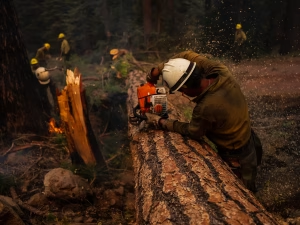
In the face of increasingly severe wildfires, safeguarding our homes and properties from the devastating effects of fires has never been more crucial. One proactive approach that homeowners can take is to hire wildland firefighters to assist in property mitigation.
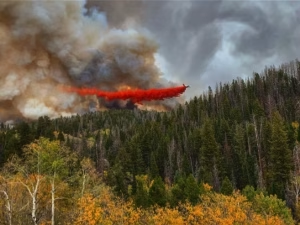
The battle against wildland fires is as old as the earth itself, yet the challenges faced by those on the front lines continue to evolve

As we enter the fall season, it’s an opportune time for ski resorts to turn their attention to an often overlooked yet vitally important aspect of their operations: fire mitigation.

As a builder or construction professional, staying updated on the latest wildland fire codes is essential. In many regions, the threat of wildland fires is a constant concern, making it imperative to prioritize fire safety measures in construction projects.

As climate change continues to impact our planet, the frequency and intensity of wildfires have increased, posing a significant risk to homeowners. One of the immediate consequences of this heightened risk is the cancellation or non-renewal of homeowners insurance policies in high-risk wildfire areas.

Wildfires have become an increasingly prevalent threat to communities around the world, with devastating consequences for both human lives and the environment.
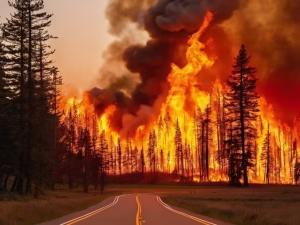
As wildfires become increasingly prevalent due to climate change, effective fire mitigation strategies have never been more critical. Many homeowners and land managers turn to arborists, foresters, and landscapers to help manage their properties and reduce fire risk.

As wildfires become an increasingly pressing concern due to climate change and other factors, homeowners associations (HOAs) are stepping into the spotlight as pivotal players in fire mitigation efforts.

Geographic Information Systems (GIS) are essential for understanding wildfire risks. By examining historical data and environmental factors, experts can create models to predict where fires are most likely to occur, which areas are at the greatest risk, and what measures can be taken to minimize them.

As the frequency and intensity of wildfires continues to escalate due to climate change and urban development, insurance companies face growing challenges in risk assessment, underwriting, and claims management.

Wildfires are becoming increasingly frequent and severe, posing a significant threat to communities, ecosystems, and economies. While the immediate costs of battling these blazes are well-documented, the long-term economic consequences of inaction are often underestimated.